Strength in Scarlet: Art as a Way to Talk About Sickle Cell Disease
A group exhibition in Ilorin and Ibadan, Nigeria, featuring Samuel Timileyin and Bayo Oladapo
Sickle cell disease has not always been with us. According to current understanding, it began about 7,300 years ago with a single mutation, and it is tied to the history of malaria and the mosquitoes that carry it. For Nigerian artist Samuel Timileyin, that history carries a quiet hope: what had a beginning can also have an end. That idea sits at the heart of Strength in Scarlet, an art in health project in Nigeria focused on sickle cell awareness and support. Samuel showed seven paintings alongside seven by a second artist Bayo Oladapo, who lives with sickle cell disease himself. The same collection was exhibited in two cities, Ilorin in Kwara State and Ibadan in Oyo State.
When Art And Medicine Meet
Why Sickle Cell, and Why Art
Roughly 7.74 million people worldwide live with sickle cell disease, and about 515,000 babies are born with it each year. Most of this burden falls on sub-Saharan Africa and India, and Nigeria accounts for a large share of new cases. The disease contributes heavily to child mortality, and researchers believe the toll is higher than earlier estimates suggested once related conditions are counted. With populations growing in high-incidence regions, the numbers are expected to rise, which makes screening and treatment programs all the more pressing.
Samuel believes the most lasting answer lies in the choices people make about marriage and partnership. If carriers of the trait, those with genotype AS, chose partners with genotype AA, the trait would slowly fade from families over generations. “Everyone that exists today will not be here in 200 years,” he reasons, and he asks what it would mean if no child were born with sickle cell in that time. The pain and endurance of those who live with the condition, whom he calls warriors, are for him reason enough to consider this path.
Because a message like this can be hard to hear, he turned to painting. Art stays in the mind, and a painting can keep a conversation going long after the exhibition closes.
Bayo Oladapo's Artworks
Two Perspectives, One Collection
The two artists came to the subject from different directions. Samuel’s paintings grew out of research. His fellow exhibitor, who has sickle cell, painted from his own lived experience. Together the works looked at the condition from the outside and the inside, and at how it touches society and the relationships between people.
Work Of Heart
This pastel painting depicts the human heart, making it a central piece in the project. Sickle cell disease is a blood disorder, and since the heart is responsible for pumping blood throughout the body, it serves as a powerful symbol of the condition and its effects.
The painting illustrates an open artery, showing healthy red blood cells flowing freely
in their characteristic disc-like shape, while a sickle-shaped red blood cell obstructs the other passage.
This blockage can restrict blood flow and oxygen delivery, triggering the painful crises experienced by people living with sickle cell disease.
Although this phenomenon occurs at a microscopic level, its consequences are vividly felt by those affected.
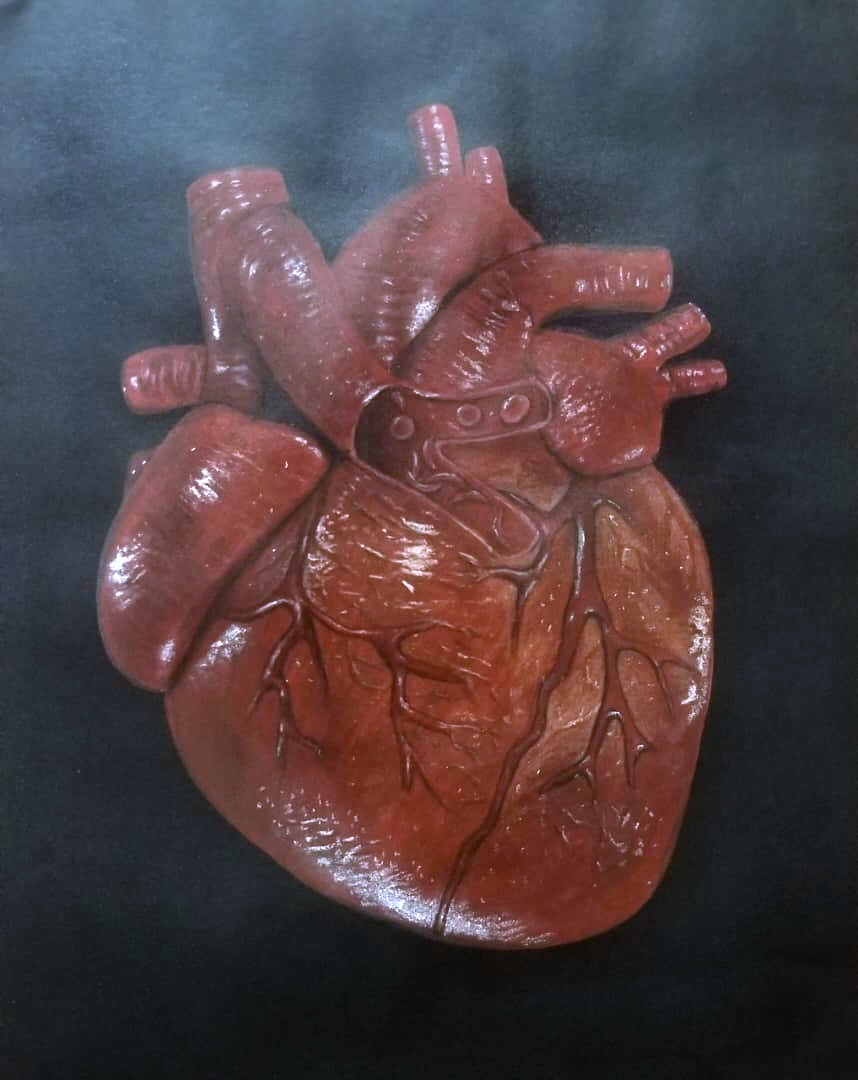
Work Of Heart | Pastels And Acrylic Painting by Samuel Timileyin
Long Life In The Blood | Pastels and Acrylic Painting by Samuel Timileyin
Long Life In The Blood
Another central work of the exhibition is a portrait of an elderly woman, titled Long Life in the Blood.
She looks out with a calm, slightly amused expression, her face deeply lined, a small red pendant at her throat. The veil around her head is patterned with rings that resemble healthy red blood cells, giving the scarlet of the title a gentle double meaning. She is a woman who has lived with sickle cell anemia into old age. Her presence offers a message of hope and a reminder that people with the condition can live full lives.
Killer Cure Conspiracy
Another painting from Samuel which somehow looks strange beside the others, is titled Killer Cure Conspiracy. It draws on a historical theory that early attempts to cure malaria may have led to the mutation that gives red blood cells their sickle shape. Malaria thrives in places with many mosquitoes, such as Africa and India, which are also the regions with the most sickle cell cases today.
The painting shows a man resting his head on white cloth under traditional Yoruba healing. A clay vessel stands beside him, and a row of cowries runs along the shelf below, a nod to the cowries, incisions and herbal drinks of traditional care. His eyes are a vivid yellow, a detail that points to sickle cell as the unintended result of an attempt to heal.
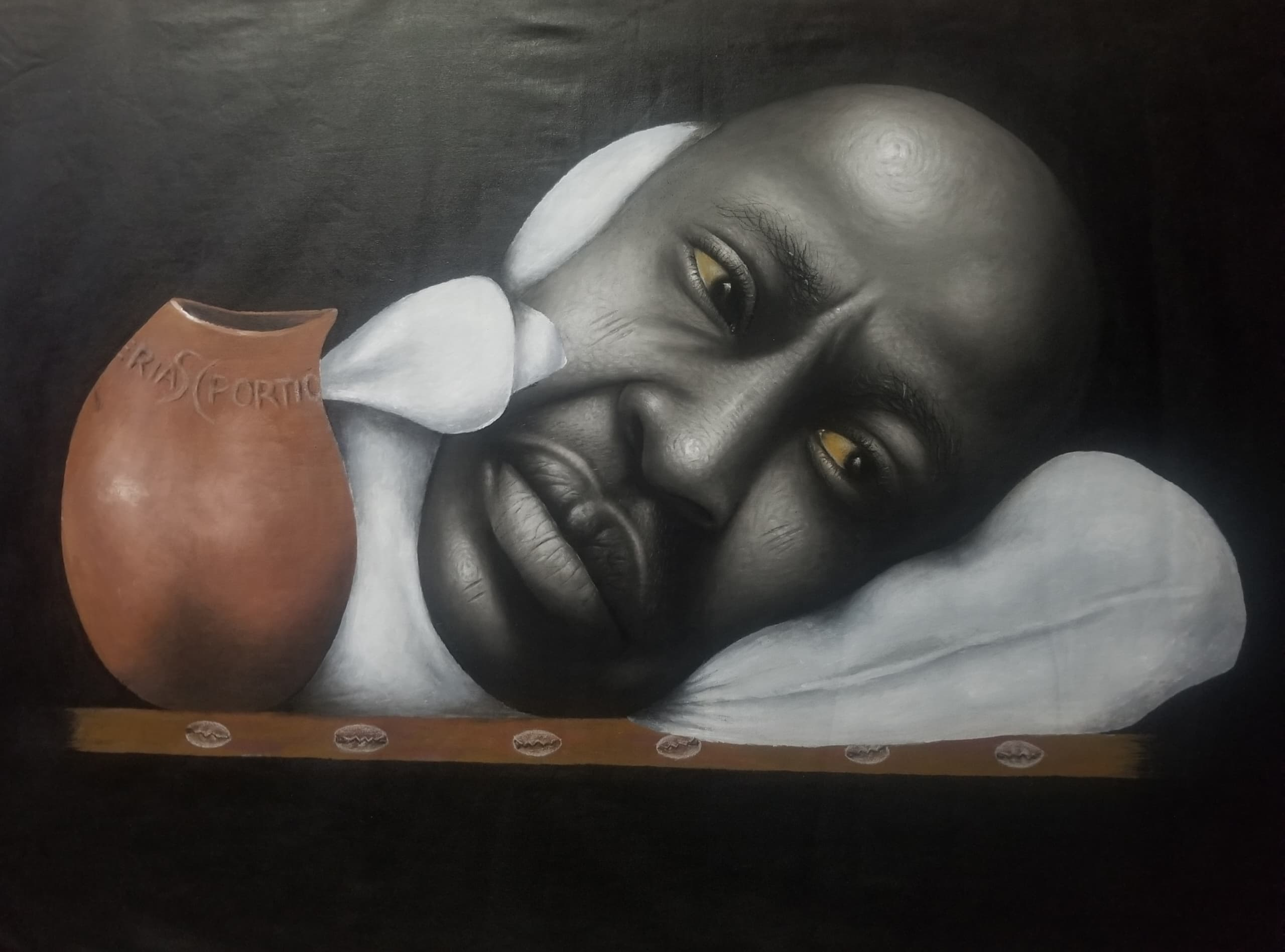
Killer Cure Conspiracy | Pastels And Acrylic Painting by Samuel Timileyin
Samuel also reads the painting as a wider comment on how a poorly judged solution to one problem can create a larger one. He compares it to the military coups that many African countries have experienced.
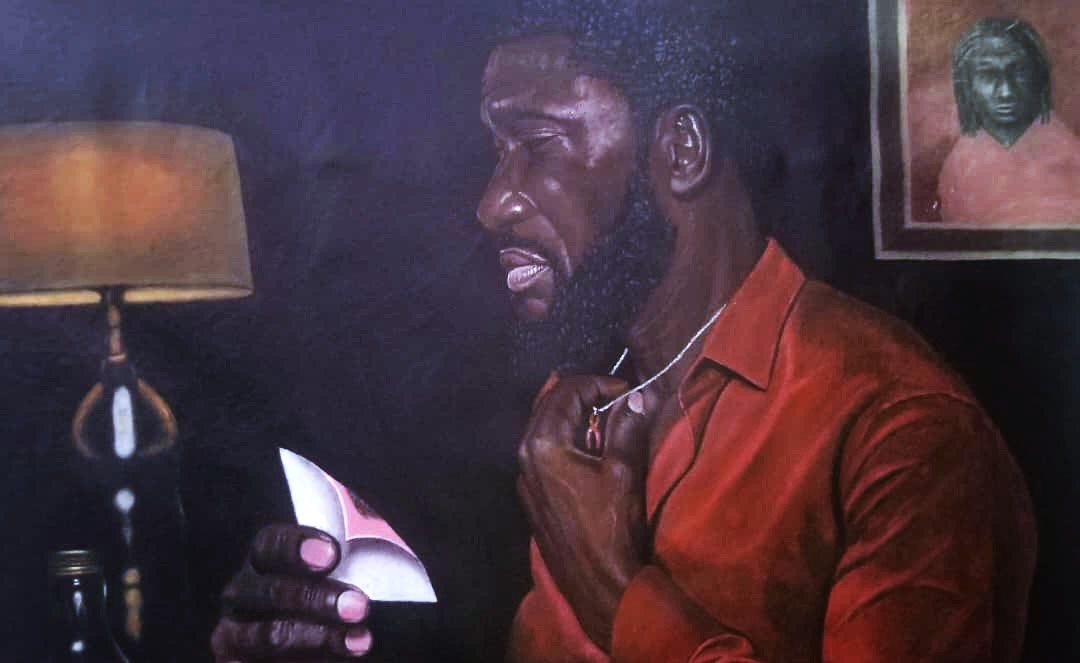
Her Pain, My Pain, Our Pain | Pastels And Acrylic Painting by Samuel Timileyin
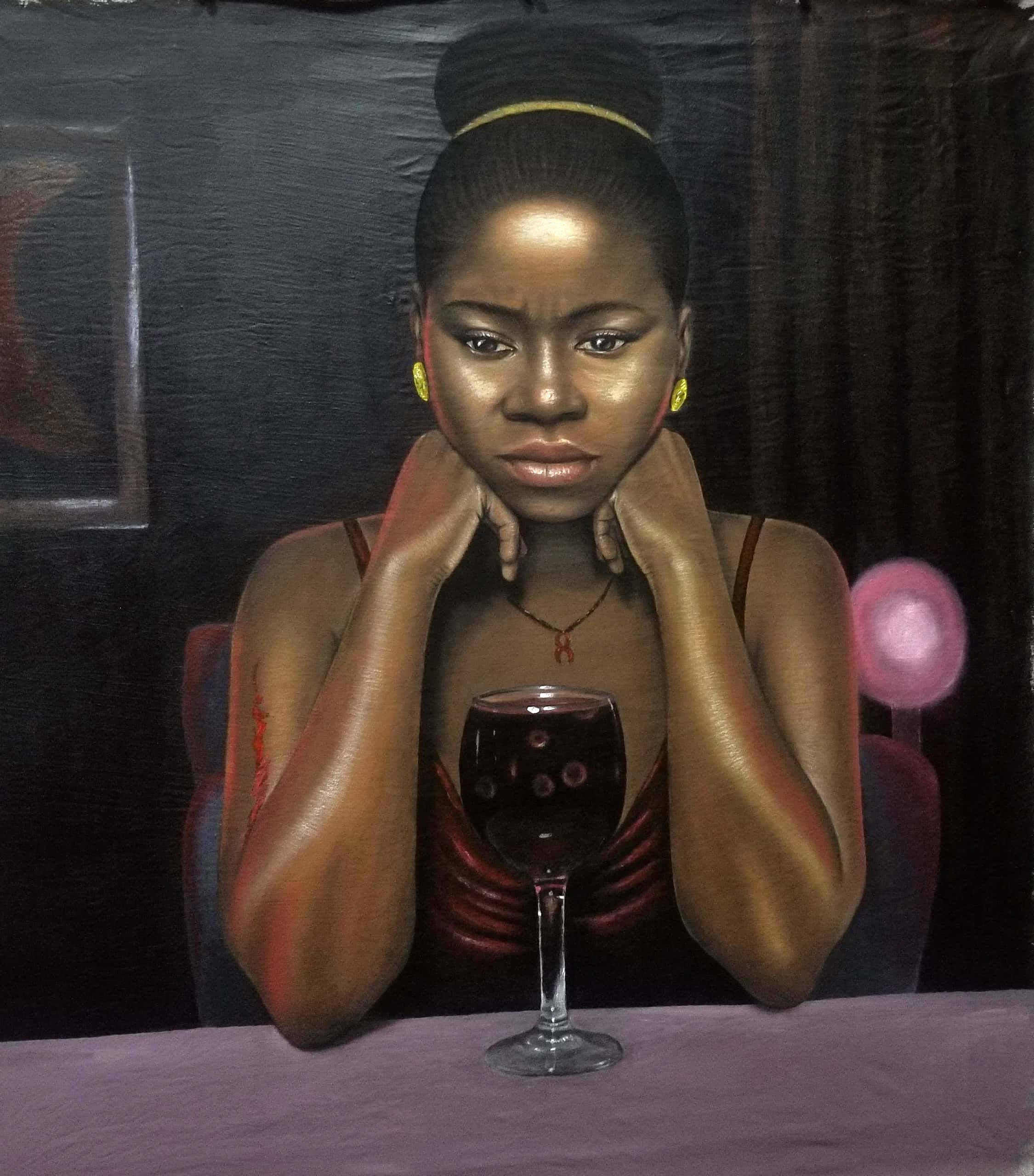
In Contemplation Of A New Genesis | Pastels And Acrylic Painting by Samuel Timileyin
Relationships and Quiet Moments of Sorrows
Other works in the collection turn toward the personal side of the condition: Her Pain, My Pain, Our Pain and In Contemplation Of A New Genesis.
"Her Pain, My Pain, Our Pain" portrays a man in a red shirt standing in lamplight, a small folded paper in one hand and the other hand closed over his sister's pendant at his chest, his face in tears. The painting captures the effect of losing someone dear to sickle cell anemia.
"In Contemplation Of A New Genesis" portrays a young woman sitting alone at a table, chin resting on her hands, looking at a glass of red wine. The artwork represents a crossroads, a moment of decision between continuing to live with sickle cell disease and pursuing a possible cure. The current treatment is a bone marrow transplant, which can be extremely expensive and carries significant risks. At this critical juncture, two fundamental questions arise: Can I afford it? And am I willing to take the risks that come with it?
Imagine spending a fortune in pursuit of a cure, only to lose your life in the process. The desired outcome is undoubtedly life-changing, but the means of achieving it demand careful consideration. With this artwork, Samuel hope also for a future where the cure could be as simple and as affordable as a glass of wine.
In The Exhibition Room
The exhibitions drew an unusually varied crowd: professors, doctors, geneticists, people working in sickle cell NGOs, and a representative from the Ministry of Health in Ibadan. Patients and people without the condition were there too. According to Samuel, everyone left having learned something new.
Patients saw their own experiences reflected in the paintings, while scientists recognized the research behind them. Some visitors knew someone whose story appeared in one of the works. Experts also discussed the true cause of the disease, and a few misconceptions were corrected on the spot, including among the exhibiting artists themselves.
Giving Back To Society
The project had two goals: to raise awareness and to raise funds for three NGOs through donations and art sales.
Strength in Scarlet Exhibition - Raising Awareness on Sickle Cell Disease
Two paintings sold on the opening day, and the exhibitions raised close to 1.5 million naira in total. The money was shared among the three organizations as planned. The project closed in Ilorin with free genotype tests for 15 attendees, a small and practical step toward the kind of awareness the paintings hope to encourage.
For Samuel Timileyin, Strength in Scarlet is less an ending than a beginning, a way of keeping an old question in front of people until it becomes an everyday part of how families think about the future.